Antimicrobial peptides and their coatings to counter multidrug-resistant clinical pathogens

Francesco M. Labricciosa, MD, Public Health Specialist

Antimicrobial resistance (AMR) is a growing public health issue. Unfortunately, microorganisms use several mechanisms to inactivate antimicrobials, making ineffective traditional therapies currently employed. Therefore, discovering novel antimicrobial agents is essential to successfully address this global challenge.

In a paper recently published in Antibiotics, a multidisciplinary group of investigators focused on non-antibiotic antimicrobial strategies, particularly on the use of antimicrobial peptides, as potential strategies for managing multidrug resistant (MDR) pathogens.

The authors started their narrative review discussing the alternative non-antibiotic approaches for the prevention and control of MDR pathogens, namely bacteriophage therapy, probiotics, immunotherapies, photodynamic therapy, essential oils, nanoparticles, and antimicrobial peptides (AMPs).

After summarising the benefits and limitations of these different approaches, the authors focused on AMP mimetics and strategies to enhance AMP activity, the mechanisms of action of AMPs, and the reduction in virulence factors by peptidomimetics.

Specific subsections of the paper concerned antifungal, antiviral and antiparasitic peptides and their mimetics. Moreover, the authors provided an overview of antimicrobial coatings using AMPs and their relevance in medical settings. Finally, they presented several additional strategies for attachment and functionalization.

AMPs are promising alternative antimicrobial agents to tackle AMR. Although their clinical potential is limited by different challenges, their stability, safety, and efficacy can be enhanced, making them more appropriate for clinical applications.

AMPs and their synthetic mimetics represent a new frontier in antimicrobial coatings against bacterial and viral pathogens. Indeed, they are a precious tool in the fight against infectious diseases, being able to disrupt microbial membranes and prevent pathogen adhesion.

The authors concluded that further research should be performed in the future, focusing on in vivo studies to evaluate both the antimicrobial and anti-virulence efficacy of these molecules.

Reference
  1. Mishra SK, Akter T, Urmi UL, Enninful G, Sara M, Shen J, Suresh D, Zheng L, Mekonen ES, Rayamajhee B, Labricciosa FM, Sartelli M, Willcox M. Harnessing Non-Antibiotic Strategies to Counter Multidrug-Resistant Clinical Pathogens with Special Reference to Antimicrobial Peptides and Their Coatings. Antibiotics. 2025;14(1):57.

Prevention and control of healthcare-associated infections: the first principle of every antimicrobial stewardship program

Francesco M. Labricciosa, MD, Public Health Specialist

The misuse and overuse of antimicrobials are among the main drivers in the development of drug-resistant pathogens, and the appropriate use of these precious medications is paramount to preserve them for future generations to come. However, healthcare professionals should always keep in mind that also an inadequate infection prevention and control contributes considerably to the emergence and spread of antimicrobial resistance (AMR).

AMR is closely related to healthcare-associated infections (HAIs): the management of patients with HAIs frequently requires the administration of broader spectrum antibiotic regimens due to the higher risk of acquiring multidrug-resistant organisms. For this reason, even before using antimicrobials correctly, preventing the occurrence and controlling the spread of HAIs in healthcare facilities is essential. It should be considered the first principle of an appropriate antimicrobial stewardship program in every hospital worldwide.

In a paper recently published in Antibiotics, an international working group of physicians defined the most important measures to prevent and control HAIs in hospital settings.

In this narrative review, the authors presented seven measures that all healthcare workers must know and support. They focused their attention not only on the pivotal role of hand hygiene and the prevention of HAIs, but also on the importance of an effective environmental hospital hygiene, the implementation of surveillance systems, and patients’ screening, decolonization, isolation and cohorting. Finally, they did not forget to discuss about adapting evidence-based practices to the local context, and promoting safety culture.

The authors hope that this document can contribute to raise awareness among healthcare professionals about all issues associated with HAIs, and the need to embrace a personal involvement in the strategies that can help reduce their occurrence.

Fewer microorganisms there will be in our hospitals, fewer antimicrobials we will use. Fewer HAIs will develop in our hospitals, fewer broad-spectrum antibiotics we will have to use to combat multidrug-resistant organisms.

Reference

  1. Sartelli M, Marini CP, McNelis J, Coccolini F, Rizzo C, Labricciosa FM, Petrone P. Preventing and Controlling Healthcare-Associated Infections: The First Principle of Every Antimicrobial Stewardship Program in Hospital Settings. Antibiotics. 2024;13(9):896.

Antibiotic prophylaxis in trauma patients: indications for an optimal management

Francesco M. Labricciosa, MD, Public Health Specialist

By definition, antibiotic prophylaxis (AP) is the use of antibiotics to prevent infections at the site of injury and/or surgical site. It must be administered close to the time of procedure initiation or time of injury, and based on its pharmacodynamics and pharmacokinetics.

The World Health Organization provides strong recommendations on the administration of AP. Nevertheless, AP is often used inappropriately worldwide.

In polytrauma patients, the presence of several injuries implicates multiple potential risks of infections. In these situations, antibiotics – for treatment or prophylaxis – are frequently used without a defined rationale following recommended guidelines. The difficulty of standardizing definitions and approaches leads to this heterogeneous practice.

Ideally, AP in trauma should be specifically targeted for each patient. AP should reduce the risk of infections due to injuries, decrease the selection of multi-resistant bacterial strains, and have no adverse effects.

The fear of infections must not drive AP prescription. Infections must be treated only when present, and their prevention must occur based on specific evidence-based indications.

To address this lack of precise indications, an international group of experts – representing five surgical societies around the world – has recently published in the Journal of Trauma and Acute Care Surgery a paper providing recommendations for an optimal management of AP in trauma patients.

The Global Alliance for Infection in Surgery, Surgical Infection Society Europe, World Surgical Infection Society, American Association for the Surgery of Trauma, and the World Society of Emergency Surgery participated in the realization of this important document.

A computerized search was performed in different databases (MEDLINE, Scopus, EMBASE), including citations published between January 2000 to May 2023. The grade of recommendation, defined as strong, moderate, and weak, was established, considering the Oxford model. Through the Delphi process, different issues were discussed by the experts in several rounds. After three rounds, the process led to 100% agreement on all statements.

The article suggests the recommendations regarding the use of AP in head and brain trauma, maxillofacial trauma, thoracic and abdominal trauma, open fractures, burns, and skin wounds and bites.

The authors conclude that AP must be used only when it is indicated. Its overuse has no beneficial effects on patients. On the contrary, it has several potential drawbacks. A tailored infection risk calculation for each patient should be always performed, keeping in mind that a correct source control plays a central role in infection prevention.

Reference

  1. Coccolini F, Sartelli M, Sawyer R, Rasa K, Ceresoli M, Viaggi B, Catena F, Damaskos D, Cicuttin E, Cremonini C, et al. Antibiotic prophylaxis in trauma: Global Alliance for Infection in Surgery, Surgical Infection Society Europe, World Surgical Infection Society, American Association for the Surgery of Trauma, and World Society of Emergency Surgery guidelines. J Trauma Acute Care Surg. 2024 Apr 1;96(4):674-682.

Intra-abdominal Infections Survival Guide: a Position Statement by the Global Alliance for Infections in Surgery

Francesco M. Labricciosa, MD, Public Health Specialist

An interesting article has been recently published in the World Journal of Emergency Surgery. An evidence-based position statement signed by a multidisciplinary working group of experts, whose main objective was to describe the best practices for complicated intra-abdominal infections (IAIs) management.

The working group, representing the Global Alliance for Infections in Surgery, included physicians from several different disciplines: general and emergency surgeons, intensive care specialists, and infectious diseases specialists.

A comprehensive literature search of pertinent scientific evidence was performed using PubMed and Google Scholar, and articles published in English between January 2010 and December 2023 were identified to formulate 28 statements. Evidence quality has been graded high, moderate, low, or very low according to the GRADE methodology. For each statement, consensus among the experts was reached using a Delphi approach. Statements were endorsed as a strong recommendation with agreement by ≥ 80% of participating experts. The final document was approved by each working group member to ensure consensus.

Several factors of importance in the management of complicated IAIs were listed.

First of all, the origin of the infection must be taken into account. Indeed, the term “intra-abdominal infections” includes several different pathologic conditions ranging in severity from uncomplicated appendicitis to diffuse faecal peritonitis. The origin of the infection should be always investigated for treatment planning. Achievement of source control is of utmost importance in the management of complicated IAIs.

Assessing the anatomic extent of infection is equally important to define the treatment approach. In uncomplicated IAIs, the infectious process only involves a single organ, while in complicated IAIs, it extends beyond, into the peritoneal cavity, leading to abscess formation or diffuse peritonitis. This classification does not describe patients’ complexity, but in its simplicity, defining the extension of the infectious process identifies those patients who need both source control and antimicrobial therapy.

Moreover, taking into account presumed pathogens involved and risk factors for antimicrobial resistance is crucial. Initial antimicrobial therapy for complicated IAIs is typically empiric in nature because standard microbiologic data and susceptibility results generally require 24-72 hours after peritoneal fluid specimen collection. For these reasons, an accurate patient stratification is crucial to optimize empiric antimicrobial therapy.

Finally, clinical conditions and host immune status have to be carefully considered when managing a patient with a complicated IAI.

The authors concluded that complicated IAIs are conditions sometimes difficult to manage, and available treatment options should be always assessed to optimize the management of patients with complicated IAIs.

Reference

  1. Sartelli M, Barie P, Agnoletti V, Al-Hasan MN, Ansaloni L, Biffl W, et al. Intra-abdominal infections survival guide: a position statement by the Global Alliance For Infections In Surgery. World J Emerg Surg. 2024 Jun 8;19(1):22.

Antimicrobial management of intra-abdominal infections: an Italian multidisciplinary Consensus Conference

Francesco M. Labricciosa, MD, Public Health Specialist

In a paper recently published in the World Journal of Emergency Surgery, an Italian multidisciplinary group of healthcare professionals promoted a Consensus Conference on the antimicrobial management of intra-abdominal infections (IAIs).

IAIs are common surgical emergencies, representing an important cause of morbidity and mortality across global hospital settings. The cornerstones of IAIs management include timely diagnosis, adequate source control, early and appropriate antimicrobial therapy, and quick physiological stabilization through intravenous fluid therapy and vasopressor agents, especially in critically ill patients.

Optimizing antimicrobial therapy is of utmost importance to improve treatment effectiveness, increase patient safety, minimize the risk of selecting antimicrobial resistant microorganisms, and reduce the risk of opportunistic infections, such as Clostridioides difficile.

The Consensus Conference was promoted by the Multidisciplinary and Intersociety Italian Council for the Optimization of Antimicrobial Use which included diverse healthcare professionals: not only surgeons, but also infectious disease specialists, microbiologists, clinical pharmacologists, hospital pharmacists, emergency medicine specialists, intensivists, radiologists, and public health specialists.

After focusing on the general principles of diagnosis and treatment of IAIs, a list of relevant clinical questions was constructed to investigate the topic. Concerning the antimicrobial management of IAIs, basic subjects were faced, such as the optimal timing to start an antibiotic therapy, its reassessment based on the results of microbiological culture and susceptibility testing, its optimal duration, daily doses and modality of administration, without forgetting to discuss antifungal treatment, as well.

Following the best scientific evidence from PubMed, EMBASE Library and experts’ opinions, the panel produced 23 recommendation statements for the antimicrobial therapy of IAIs. They were planned and graded according to the GRADE hierarchy of evidence. Using a Delphi approach, a consensus was reached for each statement.

In the last section of the paper, 8 clinical diagnostic-therapeutic pathways for the most common IAIs were presented. The document was endorsed by the Italian Society of Surgery.

The authors concluded that an effective antimicrobial strategy for managing IAIs requires a correct balance between two elements: optimizing empiric therapy to improve clinical outcomes, and curbing excessive antimicrobial use to mitigate the emergence of multidrug-resistant strains.  

Reference

  1. Sartelli M, Tascini C, Coccolini F, Dellai F, Ansaloni L, Antonelli M, et al. Management of intra-abdominal infections: recommendations by the Italian council for the optimization of antimicrobial use. World J Emerg Surg. 2024 Jun 8;19(1):23.

A global evidence-based bundle for surgical antibiotic prophylaxis

Francesco M. Labricciosa, MD, Public Health Specialist

Recommending a bundle with evidence-based measures for surgical antibiotic prophylaxis (SAP), easily applicable and helpful to improve antibiotic prescribing practices among surgeons worldwide. This is the aim of a narrative review just published in Antibiotics by Massimo Sartelli and colleagues.

Surgical site infections (SSIs) represent the most common healthcare-associated infections occurring in surgical patients. Therefore, all procedures aiming to prevent SSIs should be integrated before, during, and after surgery.

SAP is one of the most important measures to prevent SSIs. Nevertheless, many surgeons erroneously believe that SAP is peripheral to their clinical practice. But actually, surgeons play a central role in prevention SSIs.

Indeed, approximately 15% of all antibiotics in hospitals are prescribed for SAP. Using antibiotics appropriately, both for therapy and prophylaxis, is essential to improve treatment effectiveness and patient safety, reduce the risk of antibiotic-associated infections (e.g., Clostridioides difficile infection), and the selection and spread of antibiotic-resistant bacteria.

Several guidelines have been published regarding SSIs prevention, but measures stated in these guidelines are not self-implementing. Bundles are among the most used methods to adapt guidelines in local contexts, and improve acceptance and adherence to best practices.

As observed by the authors, bundles implemented as stand-alone interventions or as part of multimodal strategies were associated with decreased SSI rates.

For these reasons, an international working group of 30 physicians has been established by the Global Alliance for Infections in Surgery. The authors aimed to define a global evidence-based bundle for the appropriate SAP administration, and evaluated the evidence supporting it.

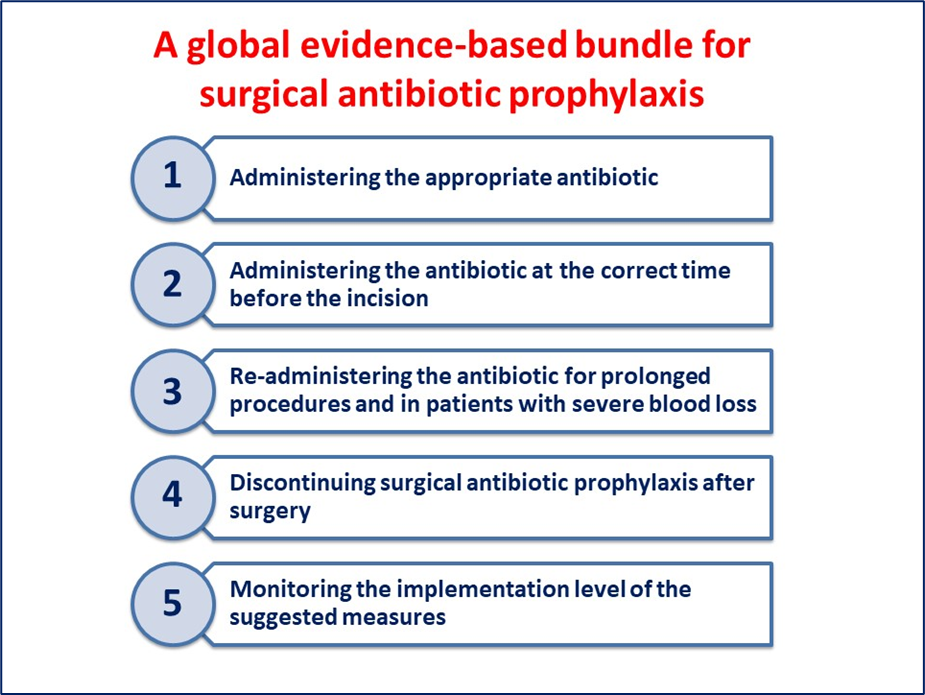
This bundle includes five different actions that may affect adequate SAP administration.

A global evidence-based bundle for surgical antibiotic prophylaxis [Adapted from Figure 1 in Ref. 1]

In administering antibiotics for any indication, including for SAP, surgeons should always be responsible for handling antibiotics with care. Indeed, inappropriate prescriptions of these precious medications, as well as poor implementation of infection prevention and control measures, are contributing to the development and spread of bacterial antimicrobial-resistance.

The authors hope this bundle can be easily applied everywhere, and help to improve antibiotic prescribing practices among surgeons worldwide.

Reference

  1. Sartelli M, Coccolini F, Labricciosa FM, Al Omari AH, Bains L, Baraket O, et al. Surgical Antibiotic Prophylaxis: A Proposal for a Global Evidence-Based Bundle. Antibiotics. 2024; 13(1):100.

Infection prevention and management in surgery: a global declaration

Francesco M. Labricciosa, MD, Public Health Specialist

In a paper recently published in the World Journal of Emergency Surgery, seven surgical societies around the world shared an important declaration.

The authors – expert physicians representing the societies involved in this alliance – highlighted the threat posed by antimicrobial resistance (AMR), and the importance to prevent and manage infections appropriately across the surgical pathway.

The Global Alliance for Infections in Surgery (GAIS), the World Society of Emergency Surgery (WSES), the Surgical Infection Society (SIS), the Surgical Infection Society-Europe (SIS-E), the World Surgical Infection Society (WSIS), the American Association for the Surgery of Trauma (AAST), and the Panamerican Trauma Society (PTS) participated in the realization of this document.

The goal was to raise awareness among surgeons about AMR by focusing on the importance of actively participating in this challenge.

Surgeons really play a pivotal role in prevention and management of infections in their daily practice. Indeed, they are primarily responsible for preventing hospital-acquired infections, particularly surgical site infections. Moreover, they are prescribers of antibiotics, both for prophylaxis and therapy.

Nevertheless, among them adequate infection prevention and control (IPC) measures, and appropriate antibiotic prescribing practices are often disregarded. Why?

In healthcare facilities around the world, cultural, contextual, and behavioural determinants can influence surgeons’ clinical practice. Furthermore, other factors – such as the fear of clinical failure, time pressure, or organizational contexts – can limit their adherence to IPC procedures and antibiotic prescribing practices.

According to the authors, surgeons in hospital settings should be aware of their role and responsibility, and follow the fundamental principles for correct infection prevention and management across the surgical pathway.

Fundamental principles for correct infection prevention and management across the surgical pathway
[Adapted from Figure 1 in Ref. 1].

Changing clinical behaviour is extremely challenging.

A collaborative and multidisciplinary approach is paramount to optimize individual patients’ outcomes and overall healthcare delivery. Each healthcare provider of the team has to participate, and be responsible for its own contribution to patient care.

The authors concluded calling all surgeons around the world to take part in this global cause, by pledging support for this declaration, and accepting responsibility for maintaining the effectiveness of current and future antibiotics.

Reference

  1. Sartelli M, Coccolini F, Ansaloni L, Biffl WL, Blake DP, Boermeester MA, Coimbra R, Evans HL, Ferrada P, Gkiokas G, et al. Declaration on infection prevention and management in global surgery. World J Emerg Surg. 2023 Dec 6;18(1):56.

Happy Holiday Season

The year 2023 is coming to an end. At the end of the year, we would like to look back at the successes but also the challenges we were confronted with and will be confronted with. Global issues have increased in intensity and speed. At this time, our thoughts are with those most affected and we hope for more peaceful times ahead. However, the year 2023 has also shown that crises are also an opportunity for change and that many people are committed to a better world. This gives hope that we can continue to act together to hand over a healthy world. The proverb “If you want to go fast, go alone; if you want to go far, go together” reminds us that there is a need for global solidarity not only as a means of reducing health inequalities but also as a way of putting up a united force against global health challenges.

Wishing you a Happy Holiday Season, we would like to remind you that at this moment many people in the world are experiencing war. As an alliance that deals with health, the Global Alliance for Infections in Surgery does not aim to discuss responsibilities, because there are too complex reasons behind war, but we aim to remember the effects that war has on people’s health.
War has a catastrophic effect on the health and well-being of nations. War and armed conflict cause a significant loss of human life and are a major cause of disability worldwide. In addition to those hurt and killed as a direct result of violent conflict, a vast amount of people are also negatively impacted by the wider effect of war on health.
War diverts essential and often scarce resources from those who need it to survive the war effort. It also damages the infrastructure put in place to support healthcare. War forces people to flee their homes in search of safety, with the latest figures from the UN estimating that around 70 million people are currently displaced due to war. This displacement can be incredibly detrimental to health, with no safe and consistent place to sleep, wash, and shelter from the elements. It also removes a regular source of food and proper nutrition. 
War inevitably reduces access to clean water, food, and sanitation. This further increases the risk of contracting communicable diseases. It elevates the risk of malnutrition and diseases linked with malnutrition. Lack of access to clean water can also enhance the prevalence of cholera and other water-borne illnesses.
The impacts of war on health are strongly gendered. While men are traditionally more likely to die or become injured in battle, women are more likely to be left to face the lasting consequences of conflict on health.
Children’s health is strongly linked with maternal health. Children born during conflict are at a higher risk of being of a low birth weight, which is associated with an increased risk of infant mortality, poorer health in later life, and childhood developmental problems. Additionally, vaccination programs are limited during times of armed conflict. This can significantly increase a child’s chances of contracting what are now largely preventable diseases.
Finally, many studies have shown that war harms the mental health of both those involved in the conflict and civilians. People who live through war face psychologically challenging situations, often being uprooted from their homes, facing food insecurity, and constant fear of death and injury to name a few. This inevitably causes damage to a person’s psychological well-being and can exacerbate existing problems.
Our mission and values as a global alliance are to bring people together to advance health and well-being beyond borders, to inspire each other and to progress together. It is for these reasons that we firmly believe in unity and dialogue.

Optimal antibiotic use in hospital settings: ten golden rules

Francesco M. Labricciosa, MD, Public Health Specialist

An important article has been recently published in the World Journal of Emergency Surgery.

A position paper, developed by an international multidisciplinary task force of experts, the WARNING collaborators, whose objective is to raise awareness of antimicrobial resistance (AMR), and improve antibiotic prescribing practices worldwide.

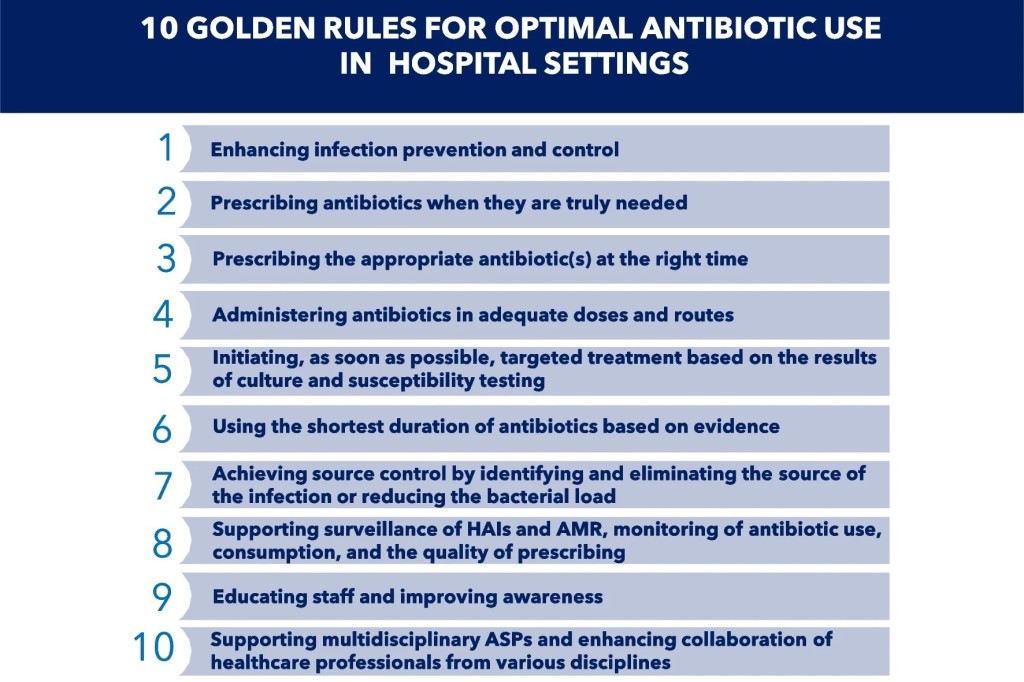
This document outlines ten axioms, or “golden rules”, that healthcare professionals should follow in their clinical practice for the appropriate use of these medications in hospital settings.

Antibiotics are life-saving medications, and therefore ensuring their correct prescription is an essential aspect of good clinical practice. The excessive and inappropriate antibiotic use is a main driver of AMR. However, in many regions of the world, there is not only overuse and misuse of antibiotics but also underuse. It is paramount to narrow the gap between excess and access.

As a matter of fact, optimising antibiotic prescribing implies improved treatment effectiveness and patient safety, minimises the risk of antibiotic-associated infections (e.g., Clostridioides difficile infection), and the selection and spread of antibiotic-resistant bacteria in patients within and across hospitals, countries, and globally.

In January 2023, the Global Alliance for Infections in Surgery established an international multidisciplinary task force to write and share a document on the need for appropriate use of antibiotics in hospitals to curb the spread of AMR.

Overall, 295 healthcare professionals with different backgrounds from 115 countries joined the WARNING (Worldwide Antimicrobial Resistance National/International Network Group) project.

In the final document, the ten golden rules for optimal antibiotic use in hospital settings have been described. They focus not only on the appropriate prescription of antibiotics, but also on the importance of Infection Prevention and Control, source control, monitoring and surveillance tools, education and awareness, and Antimicrobial Stewardship Programs.

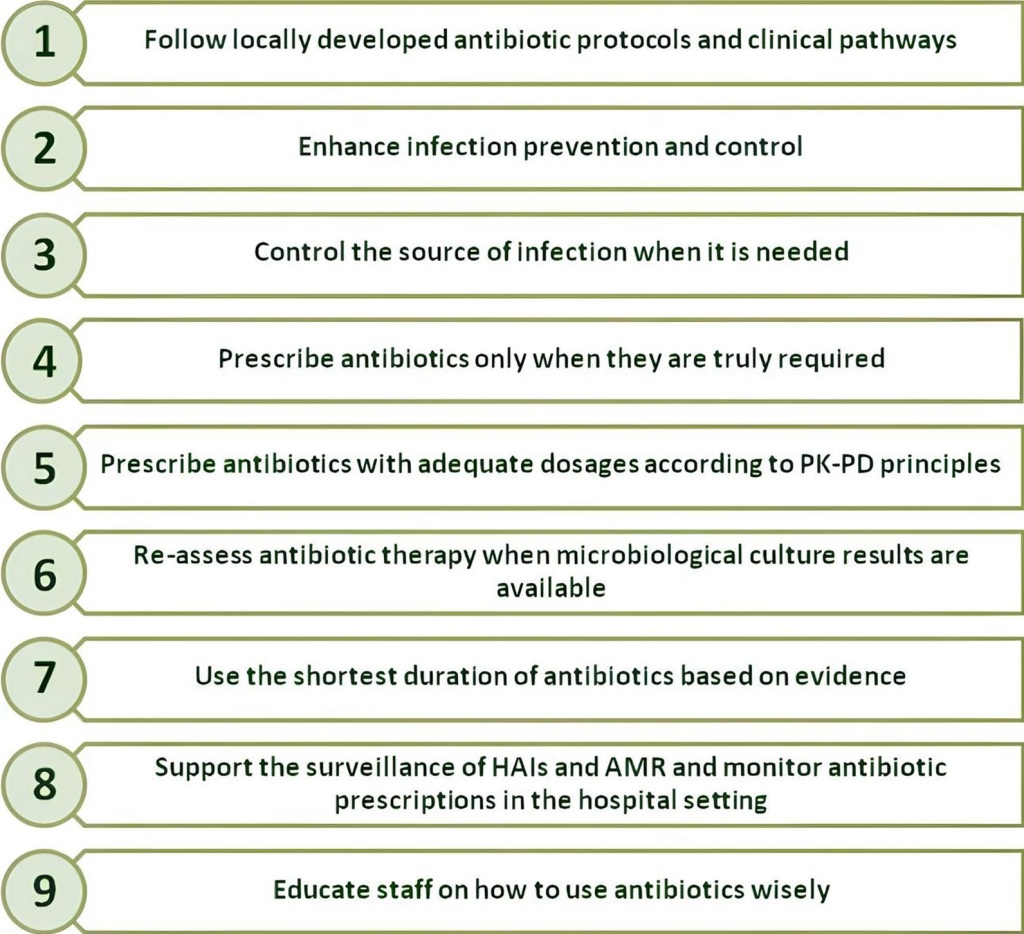
The 10 golden rules for optimal antibiotic use in hospital settings [Adapted from Figure 1 in Ref. 1].

This document confirms the mission of the Global Alliance for Infections in Surgery, promoting standards of care in managing infections in surgery through a multidisciplinary and cohesive approach.

As the authors conclude, the appropriate use of antibiotics should be integral to good clinical practice, and these precious medications should be considered as a public good on the verge of scarcity.

Therefore, it is a global collective responsibility to preserve antibiotics, and avoid future deaths caused by multidrug resistant infections.

Reference

  1. Worldwide Antimicrobial Resistance National/International Network Group (WARNING) Collaborators. Ten golden rules for optimal antibiotic use in hospital settings: the WARNING call to action. World J Emerg Surg. 2023 Oct 16;18(1):50.