Prevention and control of healthcare-associated infections: the first principle of every antimicrobial stewardship program

Francesco M. Labricciosa, MD, Specialist in Hygiene and Preventive Medicine

The misuse and overuse of antimicrobials are among the main drivers in the development of drug-resistant pathogens, and the appropriate use of these precious medications is paramount to preserve them for future generations to come. However, healthcare professionals should always keep in mind that also an inadequate infection prevention and control contributes considerably to the emergence and spread of antimicrobial resistance (AMR).

AMR is closely related to healthcare-associated infections (HAIs): the management of patients with HAIs frequently requires the administration of broader spectrum antibiotic regimens due to the higher risk of acquiring multidrug-resistant organisms. For this reason, even before using antimicrobials correctly, preventing the occurrence and controlling the spread of HAIs in healthcare facilities is essential. It should be considered the first principle of an appropriate antimicrobial stewardship program in every hospital worldwide.

In a paper recently published in Antibiotics, an international working group of physicians defined the most important measures to prevent and control HAIs in hospital settings.

In this narrative review, the authors presented seven measures that all healthcare workers must know and support. They focused their attention not only on the pivotal role of hand hygiene and the prevention of HAIs, but also on the importance of an effective environmental hospital hygiene, the implementation of surveillance systems, and patients’ screening, decolonization, isolation and cohorting. Finally, they did not forget to discuss about adapting evidence-based practices to the local context, and promoting safety culture.

The authors hope that this document can contribute to raise awareness among healthcare professionals about all issues associated with HAIs, and the need to embrace a personal involvement in the strategies that can help reduce their occurrence.

Fewer microorganisms there will be in our hospitals, fewer antimicrobials we will use. Fewer HAIs will develop in our hospitals, fewer broad-spectrum antibiotics we will have to use to combat multidrug-resistant organisms.
Reference

  1. Sartelli M, Marini CP, McNelis J, Coccolini F, Rizzo C, Labricciosa FM, Petrone P. Preventing and Controlling Healthcare-Associated Infections: The First Principle of Every Antimicrobial Stewardship Program in Hospital Settings. Antibiotics. 2024;13(9):896.

Optimal antibiotic use in hospital settings: ten golden rules

Francesco M. Labricciosa, MD, Specialist in Hygiene and Preventive Medicine

An important article has been recently published in the World Journal of Emergency Surgery.

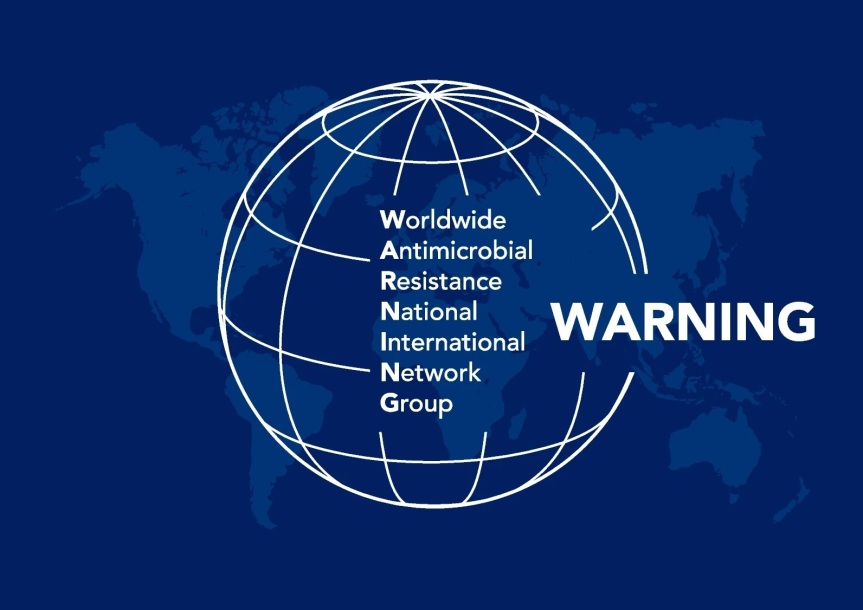
A position paper, developed by an international multidisciplinary task force of experts, the WARNING collaborators, whose objective is to raise awareness of antimicrobial resistance (AMR), and improve antibiotic prescribing practices worldwide.

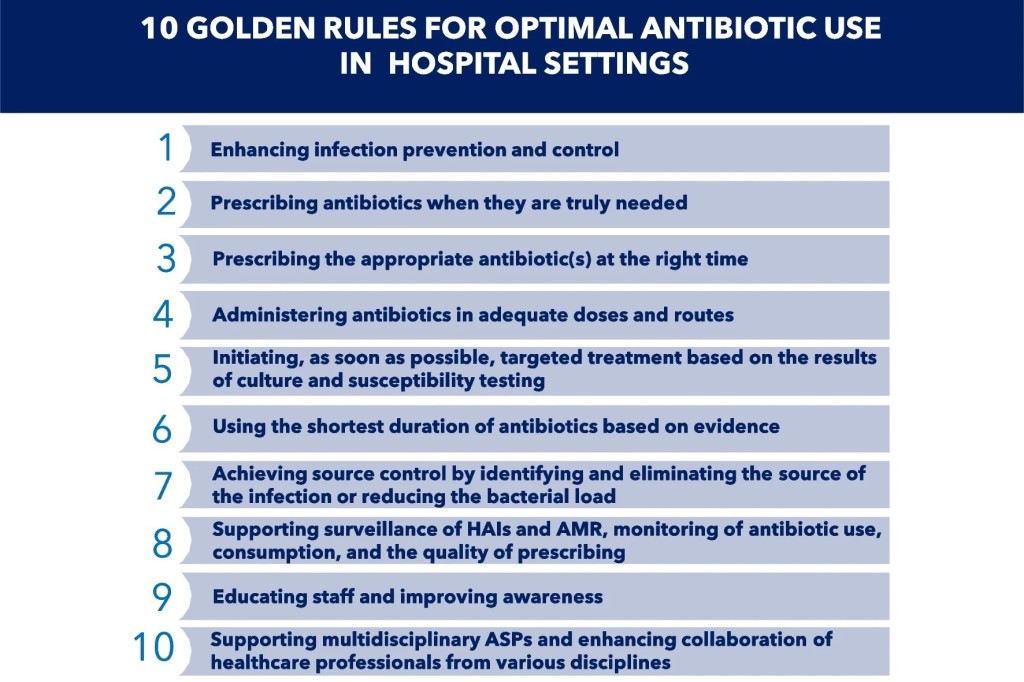
This document outlines ten axioms, or “golden rules”, that healthcare professionals should follow in their clinical practice for the appropriate use of these medications in hospital settings.

Antibiotics are life-saving medications, and therefore ensuring their correct prescription is an essential aspect of good clinical practice. The excessive and inappropriate antibiotic use is a main driver of AMR. However, in many regions of the world, there is not only overuse and misuse of antibiotics but also underuse. It is paramount to narrow the gap between excess and access.

As a matter of fact, optimising antibiotic prescribing implies improved treatment effectiveness and patient safety, minimises the risk of antibiotic-associated infections (e.g., Clostridioides difficile infection), and the selection and spread of antibiotic-resistant bacteria in patients within and across hospitals, countries, and globally.

In January 2023, the Global Alliance for Infections in Surgery established an international multidisciplinary task force to write and share a document on the need for appropriate use of antibiotics in hospitals to curb the spread of AMR.

Overall, 295 healthcare professionals with different backgrounds from 115 countries joined the WARNING (Worldwide Antimicrobial Resistance National/International Network Group) project.

In the final document, the ten golden rules for optimal antibiotic use in hospital settings have been described. They focus not only on the appropriate prescription of antibiotics, but also on the importance of Infection Prevention and Control, source control, monitoring and surveillance tools, education and awareness, and Antimicrobial Stewardship Programs.

The 10 golden rules for optimal antibiotic use in hospital settings [Adapted from Figure 1 in Ref. 1].

This document confirms the mission of the Global Alliance for Infections in Surgery, promoting standards of care in managing infections in surgery through a multidisciplinary and cohesive approach.

As the authors conclude, the appropriate use of antibiotics should be integral to good clinical practice, and these precious medications should be considered as a public good on the verge of scarcity.

Therefore, it is a global collective responsibility to preserve antibiotics, and avoid future deaths caused by multidrug resistant infections.

Reference

  1. Worldwide Antimicrobial Resistance National/International Network Group (WARNING) Collaborators. Ten golden rules for optimal antibiotic use in hospital settings: the WARNING call to action. World J Emerg Surg. 2023 Oct 16;18(1):50.

Francesco M. Labricciosa, MD, Specialist in Hygiene and Preventive Medicine