
Francesco M. Labricciosa, MD, Public Health Specialist
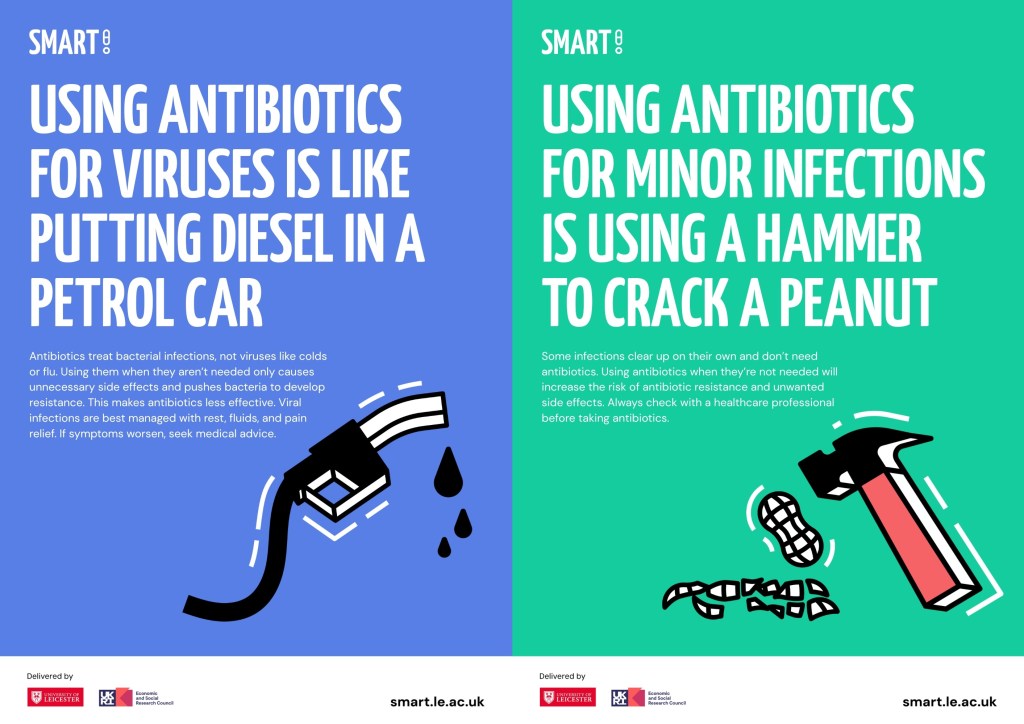
Antimicrobial resistance (AMR) is a major global health threat. However, shortcomings in AMR communication continue to be an obstacle to improving knowledge and raising public awareness, both of which are essential factors for encouraging behavioural change.
Although still relatively underexplored in the field of AMR communication, metaphors are promising tools. By framing abstract and complex scientific concepts in more accessible and familiar terms, they can make AMR easier for the public to understand.
To improve global public-facing risk communication on AMR, a research group led by Dr Eva Krockow from the University of Leicester developed a series of new metaphors designed to address common misconceptions and inappropriate behaviours. The study, which actively involved stakeholders and healthcare professionals, was recently published in Scientific Reports.
Building on the evidence from this study, these 38 metaphors have been turned into a visual communication toolkit called SMART (Strategic Metaphors for Antibiotic Resistance Toolkit). This project was conducted under the leadership of Dr Eva Krockow, in collaboration with Prof Marc Mendelson from the University of Cape Town, and was funded by the UK’s Economic and Social Research Council (ESRC).
SMART is grounded in social science theory and evidence-based research. The toolkit brings together carefully developed metaphor-based messages that address nine common gaps in understanding and misconceptions related to inappropriate antibiotic use. Each message is paired with practical and easy-to-follow actions that people can take to help reduce antibiotic resistance.
SMART combines powerful metaphors with attention-grabbing visuals. Together, these elements strengthen the emotional impact of the messages and help capture attention in today’s fast-moving information environment.
SMART is designed to be flexible and adaptable across languages and cultural settings. Users can access the original English messages developed through global expert review or adapt and translate them for their own audiences. The visuals can also be customised, including AI-generated and brand-aligned graphics created using guided prompts.
This toolkit is intended for anyone communicating with the public or patients about antibiotic resistance, including healthcare professionals, global health communicators, policymakers, non-governmental organisations, and healthcare institutions.
All resources are freely available in downloadable formats for easy use and sharing.
References

